

Precision or Paralysis: ROI for Female Founders
Precision and accuracy have meaningful differences that impact your business. For underfunded female founders and women-in-business, precision matters. You can be precise and wrong — hitting the same spot over and over, confidently, nowhere near the target. You can be accurate and inconsistent — landing near the truth of a measurement sometimes, missing it wildly other times. Since women in business receive less than 2% of venture capital annually, we have to be precise. Read more at www.KellieAdkins.com/new-blogs
There I am in Chemistry class listening to the professor lecturing on measurement (an essential skill for any budding chemist). The lecture turned to a critical distinction between precision and accuracy. Surely I had heard this lecture before. But this time I heard it. And it gave me a new way to evaluate my own individual efforts, which allowed my perfectionistic, striving, self a little grace.
I was in the first year of “catch up” courses on a pathway I believed ended with a PhD in Neuroscience. After living abroad the year prior, and changing my major from Biology to Religions the years prior to that, I was swimming in a sea of self-doubt and anachronistic longings.
What if I had stuck it out in (third year) Genetics as a first-year?
What if I had trusted my mind enough to tackle Calculus earlier?
Why didn’t I complete a second thesis to graduate with both a B.A. and a B.S.? I had done all the coursework!
Why didn’t I go to Nepal after college to study with Buddhist nuns like I planned?
Mostly: WTAF was I doing back in my hometown?
Back to the lecture:
“Precision and accuracy get used interchangeably in everyday language, but in chemistry they measure two different things entirely,” the professor says.
Accuracy is how close a measurement lands to the true value.
Precision is how consistently repeated measurements land in the same place, regardless of whether that place is correct.
You can be precise and wrong — hitting the same spot over and over, confidently, nowhere near the target.
You can be accurate and inconsistent — landing near the truth of a measurement sometimes, missing it wildly other times. The goal is both at once: tight grouping, centered on what's actually real.
This is the distinction that gutted me in that college Chemistry course. And one that I think women-in-business need to sit with, because most business (and life) advice sold to us conflates the two.
"Trust the process" is often an accuracy claim with no precision behind it. That message gets you going in a general direction with no method for consistently getting there.
"Hustle harder" is a precision instruction with no accuracy check. That message tells you to repeat effort without verifying you're aimed at the right target.
Repetitive effort without verifying your targeted goal isn’t a strategy–it’s a recipe for disaster.
These slogans are marketed as solutions, when, in fact, they overlook the structural and systemic forces that challenge female-and-femme-led enterprises.
These sycophantic simplifications wear different clothes depending on who’s presenting them as solutions. Sometimes, they’re all dolled up with a side of spirituality (I’ll see your “manifesting blueprint” and raise you a “cosmic-realignment of your energy centers”). Other times, these are packaged up in sleek suits accompanied by overblown exaggerations (“Go from six-to-seven figures with my eight-point mindset map for your business”).
If you’ve been in business (especially online-adjacent) business for any length of time, you’ve seen the yucky tactics, you’ve probably slipped down one of those marketing funnels, and maybe you fell into the sticky web of contradictory platitudes telling you to “Do more, charge more, be more,” and also “Do less, don’t chase, just attract” and then, “Your bank account is up to you” but also, “You are not your bank account” and ….I could go on….but ….
The data below are my accuracy check and will drill this point home; I’ll let the data speak so this piece is grounded in what's true, not just my whiny gut-check on an exploitative, gendered power differential in business (and business advice).
Keep the Numbers (Save the Spin)
I’m guessing y’all have sat through enough breathless pitches and “But, wait!”-filled on-demand “trainings” to know the difference between a claim and a citation. I lead with data to flesh out the problem — including the parts that complicate a tidy narrative.
these data are drawn from US sources, so they are implictlly limited as such.
I’m using “women” because the data on LGBTQIA+ and femme-led enterprises are difficult to find at scale.
“Women” is itself a blended category: Single women? Married women? Black women? White women? Immigrant women? Minority women? Women who are mothers? Women who are caregivers? This category is just one “bucket” in which the data are collated. I’m not putting every woman in the same category —but the data do. In order to have better solutions, we need to articulate the problems better: that begins with better data.
Having said all that, here is what the data show.
Women are building at pace.
It’s no longer about ownership…
Women now own roughly 14.2 to 15.7 million businesses in the U.S. — depending on whether you use Census or Wells Fargo's count — generating between $2.8 and $3.3 trillion in annual revenue (Corp! Magazine, The Broker Shop). Between 2022 and 2025, women-owned firms grew 12.1% — outpacing male-owned firms. Solo, non-employer businesses owned by women grew 62.2% faster than their male-owned counterparts over the same span.
What those data don’t show is the precision problem inside of that growth: in spite of owning roughly 40% of all U.S. businesses, women-owned firms hold only 9–9.6% of total business employment and just 4.6–6.2% of total business revenue.
Men own 2.6 times more employer businesses than women, employ four times as many workers, and generate 7.4 times more revenue (Wells Fargo Impact Report, via Corp! Magazine).
Women are not scaling at parity.
…It’s about scaling.
We are starting at parity–or at least catching up— but not scaling at the same level. This gap isn't explained by ambition, acumen, or ability; the volume of new businesses proves women-in-business have that in abundance. The scaling gap is explained by structure; most women-owned businesses stay solo and self-funded, which caps growth by design, not by choice.
Venture capital data shows the same pattern in sharper relief.
2025 was widely reported as a record year: female-founded companies raised $73.6 billion, capturing 27.7% of total U.S. VC deal value for the first time (PitchBook, via Fortune).
Peek beneath the hood of that headline, and the truth of those numbers will give you pause.
Two-thirds of that $73.6 billion went into AI. More than $30 billion of it landed at exactly two companies — Anthropic and Scale AI — both counted as "female-founded" because a woman sits on a mixed-gender founding team, not because a woman is the sole founder (Fortune).
Women are (still) underfunded.
When you remove the two outliers above, the "record year" framing changes substantially.
For companies founded solely by women, the number is 1.1% of all VC capital deployed in 2025, down from 2.1% the year before (PitchBook–NVCA Venture Monitor). Deal count for all-women teams hit its lowest level since 2018.
Nearly 79% of first-time VC financings in 2025 went exclusively to all-male teams. Only six new women-led VC firms launched in 2025 — the fewest since 2011 — and capital raised by women-led funds fell 37% year over year.
Women-owned companies are more profitable to investors
Here's the finding that should reframe the whole conversation: research cited across multiple 2025–2026 industry analyses, sourced to Boston Consulting Group, found that women-founded companies generate 78 cents of revenue for every dollar invested, compared to 31 cents for male-founded companies (Femfounded).
I want you to read that last sentence again. See where it lands in your body –especially if you are a female-led business owner.
We (women-owned enterprises) are the most capital-efficient investment by a factor of more than two — and we receive capital like a rounding error.
That's not a performance gap. It's an allocation choice being made by people who control access to capital, and it long predates any of us individually walking into a room asking for funding.
Before the funding conversation even starts, the wage gap already shapes what capital women can self-generate.
Women (still) earn less than men
I know the headline isn’t a shocker, but… shit. In the first quarter of 2026, women's median weekly earnings were $1,098 versus $1,362 for men — 80.6% of the male median (U.S. Bureau of Labor Statistics). For Black and Hispanic women, the gap compounds: Black women's median earnings were 85.4% of white women's, and Hispanic women's were 80.5% of white women's (BLS). For BIPOC women, credit access compounds it further — 73% report that getting a loan was somewhat to very difficult, and 45% of BIPOC applicants have never been approved for one, compared to 36% of white women (Wells Fargo, via Bizwomen). I’ve written on this topic before, including practical strategies for women in business to earn more.
What Gives? Or, What’s Actually Blocking Us
None of this is happening in a vacuum, and it isn't happening because women are worse at business. It's happening inside specific, documented structures, and precision requires naming them plainly.
Unpaid Care Work
The invisible labor tax runs before the business day even starts. Care work — childcare, eldercare, household management — is disproportionately unpaid and disproportionately performed by women, and it is excluded from GDP entirely because standard economic measurement wasn't built to count it (UNDP). In the U.S. alone, unpaid caregiving is valued at more than $1 trillion annually, with women providing $643 billion of that value (National Partnership for Women & Families, BLS American Time Use Survey). Globally, Oxfam estimates the value of women's unpaid labor at $10.9 trillion a year — more than the combined revenue of the fifty largest companies in the world (New York Times / Oxfam). This is the hidden ledger entry nobody puts on a pitch deck: the hours a founder has already worked before she opens her laptop, subsidizing an economy that doesn't record the transaction.
When people tell you money makes the world go ‘round….LOL in their face. Women’s love and (unpaid) labor makes the world go ‘round, hon. Since the dawn of f’n time (and we women are tired).
One Generation Deep
This capital gap is not ancient history (though it is the foundation HIS-story)— it's one generation deep.
Women in the U.S. could not open a credit card in their own name, independent of a husband's signature, until the Equal Credit Opportunity Act passed in 1974 (Forbes Advisor). That means the first generation of American women to build independent credit history, and therefore independent access to business capital, is only now reaching the years where that capital would typically compound into real intergenerational wealth. We are not behind because of some innate gap in financial capability. We are early in a structural transition that men have had roughly two more centuries to compound inside. Naming that isn't an excuse; it's the actual timeline, and it changes what "catching up" should reasonably look like.
Women’s Industries (still) Undervalued
And the industries where women concentrate get valued differently by the same market.
Wellness, caregiving, education, coaching, "soft" service work — the fields where women-owned businesses cluster — are structurally undercapitalized relative to their economic footprint, in part because capital markets have historically treated "women's work" as inherently lower-margin, harder to scale, and less fundable, independent of the actual unit economics (UNDP). That's not a market signal. It's a blind spot with a balance sheet.
Put together: an invisible labor tax before the workday starts, one generation of independent credit history, and a capital market that structurally undervalues the industries women build in.
That's the reality and like many Both/Ands, the avenues to deal with it are contradictory. Because, none of the above are good reasons to stay small. In fact, they are the exact (dare I say, precise) reasons precision matters more for women in business than it does for someone else (read: men).
Precision Packs an Exponential Punch
Precision’s operating principle reads like a manifesto: if the system isn't allocating capital at parity (and that’s what the data show), then the resources you already control have to be deployed with more precision than someone some man building from a funded position and cushioned platform.
Precision means staying lean.
Precision requires naming to yourself when you're in "figure it out" mode versus "execute a known method" mode. Precision requires you to understand those modes–and to meet them with completely different resources.
Precision will save you time, but it means asking someone who has already solved the specific problem you're circling, instead of re-creating an answer independently. (I know, I bristled at that last sentence, too. I’m an eldest daughter –being independent is in my DNA. Asking for help?!? Who do you think I am?)
If some part of you still believes that “Struggle” = “Deserving” and “Isolation” = “ Strength” then please, for all that is good and holy, let those limiting beliefs go right now. Sometimes struggle is just struggle and isolation is just isolation.
The hard truth in business is that the faster you close the gap between where you are and how to get where you want to be (by asking someone who's already solved your exact problem), the faster you’ll get there. In between, you’ll have less burnout. This is why well-funded businesses get there– wherever they’re going– faster. Money is an excellent problem-solver.
Honesty Checkpoint: The Coaching Industry
If you’re thinking this is where I pitch you on my coaching: it isn’t (yet). I won’t insult your intelligence by handing you flattering statistics about coaching ROIs without context. If I only quoted the widely cited 5x–7x ROI figures from the International Coaching Federation and MetrixGlobal without naming that those numbers come largely from people who already believed in coaching before they paid for it, I'd be doing exactly what undercapitalizes trust in this whole category.
A 2018 Harvard Business Publishing survey found that only about a third of business leaders reported being meaningfully more effective after a coaching or leadership program (Harvard Business Review). And, most masterminds underdeliver for reasons that have nothing to do with the strategy taught inside them: no real screening for fit, no group accountability, no ongoing feedback loop, facilitators who either overcontrol the room or disappear from it entirely (11 Reasons Mastermind Groups Fail).
The honesty checkpoint is that coaching and cohort work produce real ROI when the structure itself is, well, precise. That looks like a deliberate screening process, well-defined accountability, a coach or self-aware facilitator who can practice presence and build community, and a clear outcome instead of open-ended promises. Those decisions are educational design standards that have nothing to do with marketing (unless you practice trust-based marketing *raises hand*).
A Question without an Answer
So here's where I'll leave this, at least for today: what do we actually do about it?
Not the mindset version of that question — I'm not interested in convincing you to feel differently about a funding gap measured in trillions of dollars and a legal timeline that only started in 1974.
I mean the structural version.
If the invisible labor tax, the capital gap, and the undervaluing of "women's work" industries are the terrain, what does a business actually built for that terrain look like?
What does precision — not more hustle, not more trust-the-process — require in practice, for someone starting later, funded less, and carrying more unpaid weight than the data assumes she's carrying?
I have real thoughts on this. I've spent the last several years building specific answers to it — the Wisdom Method Business Incubator and my book + corresponding course, the Purpose and Prosperity Project (I promise I’ll share more about both soon).
For now, I'm curious: how do you fill this gap yourself? Do you have your own version of precision: a method, a structural fix, or a decision framework that got you out of figure-it-out mode? I’d love to know. Reply, if you’re willing to share your thoughts. I read every comment and reply.
Sources:
U.S. Bureau of Labor Statistics, Median weekly earnings $1,098 for women, $1,362 for men, first quarter 2026
U.S. Bureau of Labor Statistics, Highlights of Women's Earnings in 2024
Wells Fargo, "The Impact of Women-Owned Businesses" (2026), via Corp! Magazine and The Broker Shop
PitchBook, "US All In: Female Founders in the VC Ecosystem," via Fortune and LinkedIn/Joanna McGinley
Boston Consulting Group revenue-efficiency research, via Femfounded
Wells Fargo, "State of Women's Small Business," via Bizwomen
National Partnership for Women & Families, Unpaid Care Work Analysis (BLS American Time Use Survey)
UNDP, Valuing Women's Unrecognized Contribution to the Economy
The New York Times / Oxfam, Women's Unpaid Labor Is Worth $10,900,000,000,000
Forbes Advisor, History of Women and Credit Cards: 1970s to Present
Harvard Business Review, 2018 State of Leadership Development
Damian Mark Smyth, 11 Reasons Why Mastermind Groups Are Doomed to Fail
AI Policy + Use
I’m being transparent about my process and my AI usage — where it shows up, where it absolutely does not, and how, exactly, I use the medium. Learn more about how I employ AI at www.KellieAdkins.com/new-blogs
I use AI in my process from thought to page in my public-facing posts and blogs on this website.
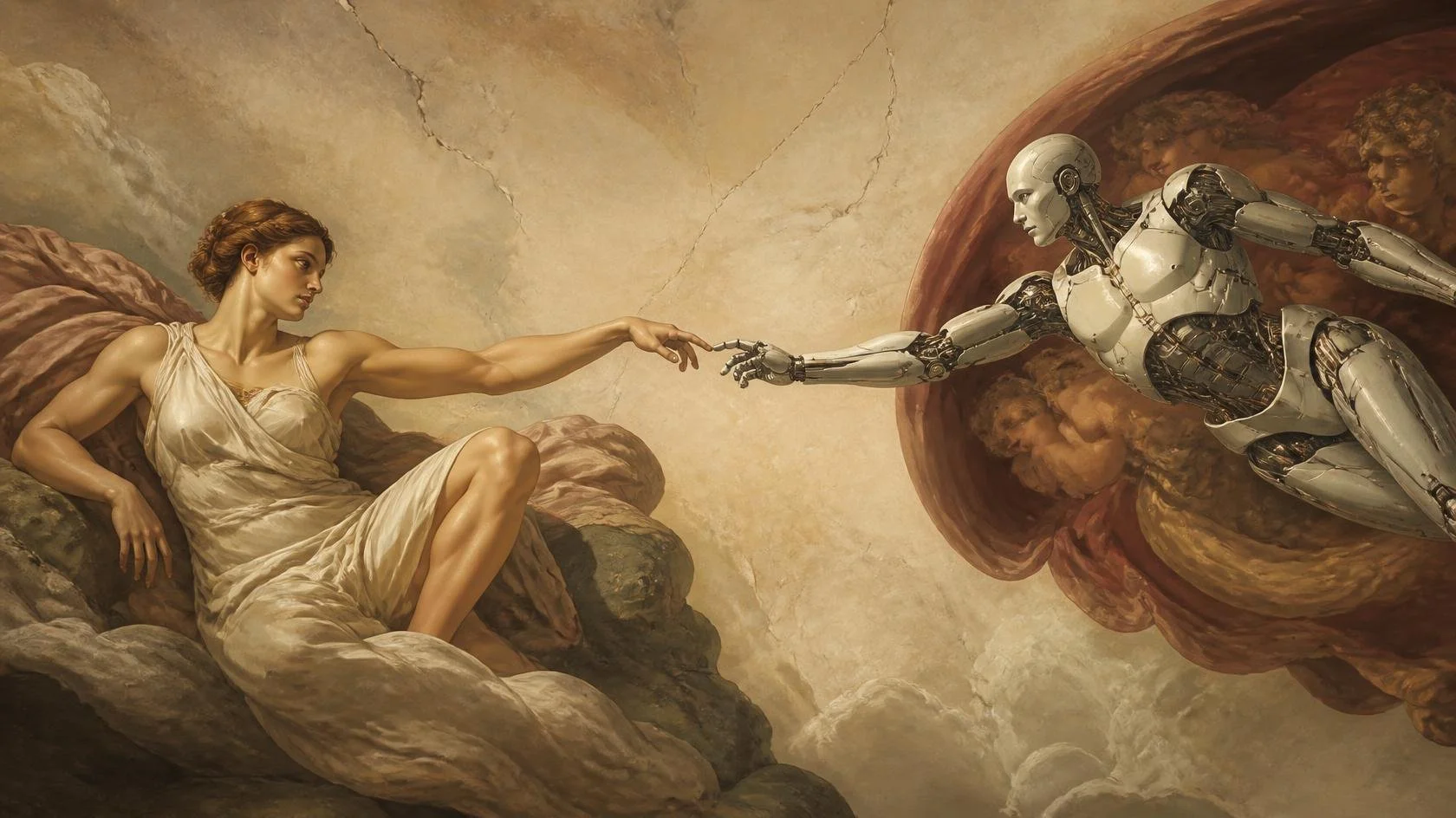
Mostly, that looks like transcribing my audio notes (on the front end) and adding keywords and SEO optimization (at the back end). Very rarely, I use AI to generate images like the one above.
I do not use AI to write or compose my work, to write or compose my social media posts, or to write or compose my articles. Likewise, all comments or messages coming from my social accounts are me —or an actual support team member.
Even so, most of my work is flagged as AI-generated (see below, with timestamps showing when the original work was created).
I have thoughts about why that is:
First, I was trained in academic writing and am a student of philosophy; thus, “if [this], then [that]” construction is hard-wired into my thinking and writing process.
Next, for context, as a youth, my preferred author was Edgar Allan Poe (famously verbose with an astonishingly rich and emotionally evocative vocabulary), and I challenged myself to expand my vocabulary in a similar style. [Stephen King’s On Writing later shape-shifted my particularly verbose writing style—with dubious efficacy, as this list evidences].
Then, I am trained in a particular style of ontological inquiry that involves intensive visualizations, layered mind-maps, and a rigorous system of logical and philosophical tenets, generally organized by itemized, numbered, or mnemonic lists. The systematic organization of knowledge packets into digestible, preservable sound bites—for the purposes of memorization and retrieval—is built into my own intelligence: AND/ALSO superintelligence (computers, AI, LLMs) frameworks are designed to mimic this process. To put a fine point on it: the machine thinks like me because it was designed in the image of critical, logical thinkers. We had the same teachers. We use the same cognitive framework.
Also, I spent years writing on the internet (blogging since 2008); thus, I am part of the community of creatives whose collective works were stolen by the AI companies — they called this theft “training data.”
Next, I am a voracious reader. I know very few individuals who read as much (or as expansively) as do I and that isn’t a value statement; it’s a historical fact. I used to keep count of the books I’ve read. I stopped after reaching 10,000 (in high school). I’ve read 2-3 books every month since then —and no, I’m not telling you how long ago high school was! But I will tell you that I’ve had my nose buried in a book, or several, on the daily, since learning to read in 1985 (you do the math).
Lastly, I spent time working in tech— training the AI (LLM’s) we all now rely on. One cannot export one’s brain to the machine for as long as I did without it impacting both ways.
I use AI to assist with coding —then a human reviews the code.
I do not rely on AI for coding and data security. That is a human’s job.
I use AI to build back-end supports for my own purposes —not to run my business.
I do not use agentic AI to run the back end of my business. I’m picky about privacy, and don’t trust a bot to manage important or delicate details. That is a human’s job.
I do use AI to create mind maps of my business to share with possible collaborators (like this); to create writing assessment rubrics to ensure my writing fits my audience (I write curricula for a variety of audiences); to create tools for my clients to project their revenue in alternate business models (like this); to build scalable solutions to intractable problems in certain industries (like this); to build tools that solve public health problems disproportionately affecting women, children, and marginalized individuals (see below).
I use AI to build apps and virtual reality spaces to support survivors of trauma in their healing—then a human reviews the code.
I do not support, endorse, or enjoin outsourcing therapeutic work or relying on agentic AI to deliver therapeutic sessions. I do support the use of AI, or AI-created tools, to deliver in-the-moment resources or supportive tools between sessions.
I'm transparent about where I use the medium— and, just as importantly, where it never touches my work.
AI doesn’t touch my research meant for publication or my client’s sensitive information. Full stop.
AI doesn’t touch my emails, client conversations, or editing process (all typos, odd phrases, and dangling participles are my own). I’ve opted out of Gemini in my Google workspace and do not use Notion or AI transcription without explicit consent: if a client requests a transcription or recording of our calls, I first disclose that use of AI, then get their opt-in in advance.
When I do use AI, I use paid, enterprise-level tools with the strongest data privacy agreements currently available (they explicitly do not train on my data). Even then, I treat the medium like what it is: a very smart but inexperienced college freshman that makes a lot of mistakes and comes with deep biases and possible nefarious purposes.
Every idea, argument, and turn of phrase is mine. I built an accessible process, employing AI for transcription, product development, and online visibility because 1) I'm a verbal, nonlinear thinker, and 2) I used to pay for the work I now use enterprise-grade AI to do faster, and 3) because I think an honest answer to "did you use AI" deserves more than a “yes” or “no.”
Pictured below: a few receipts.
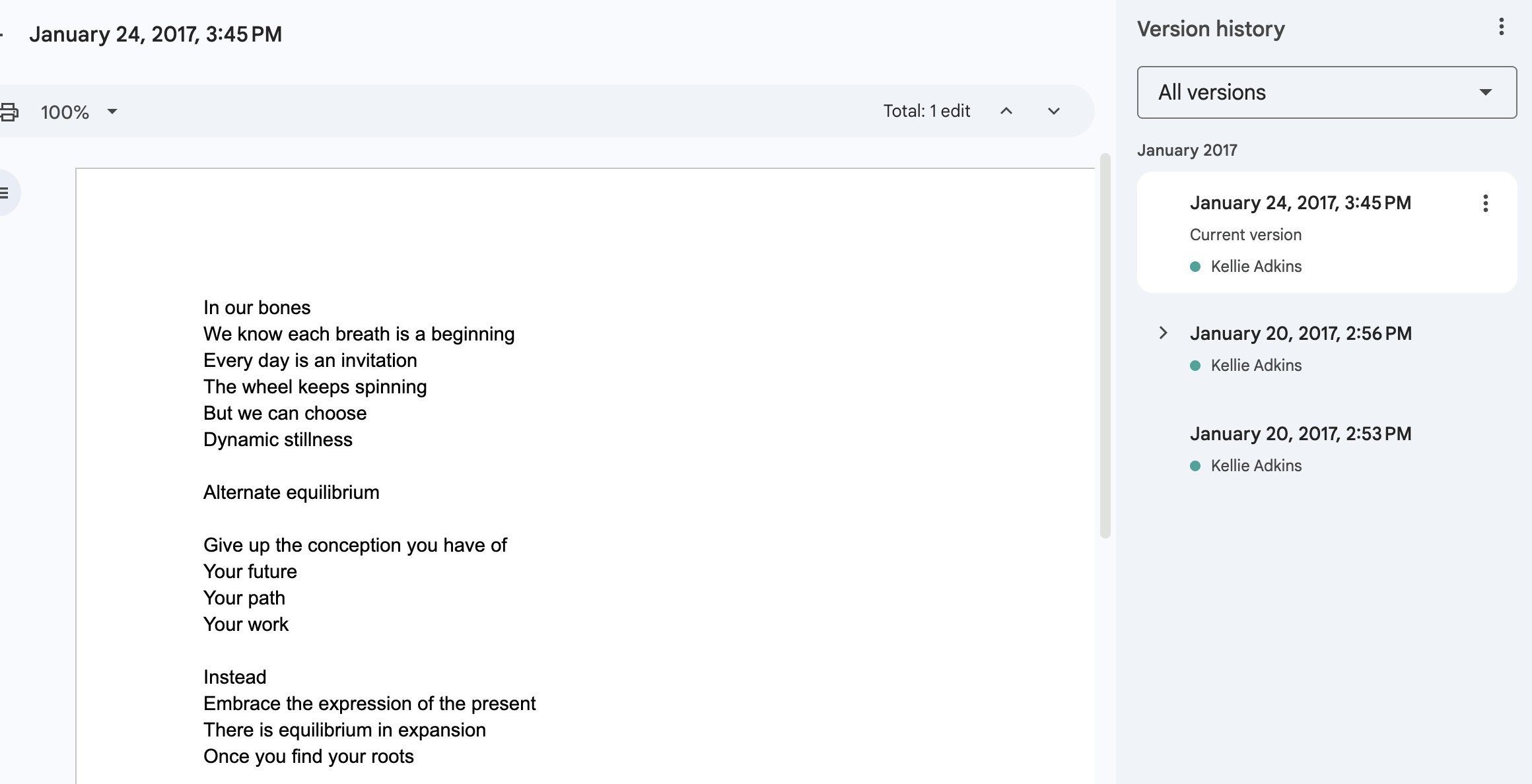
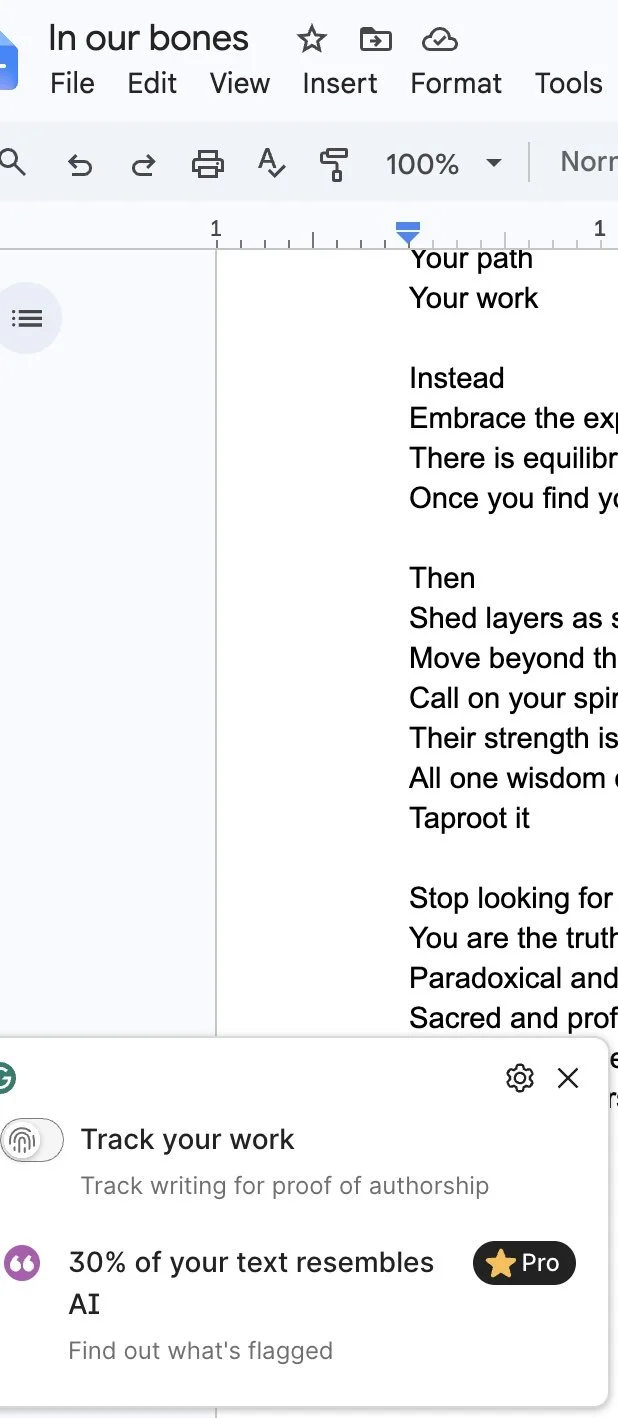
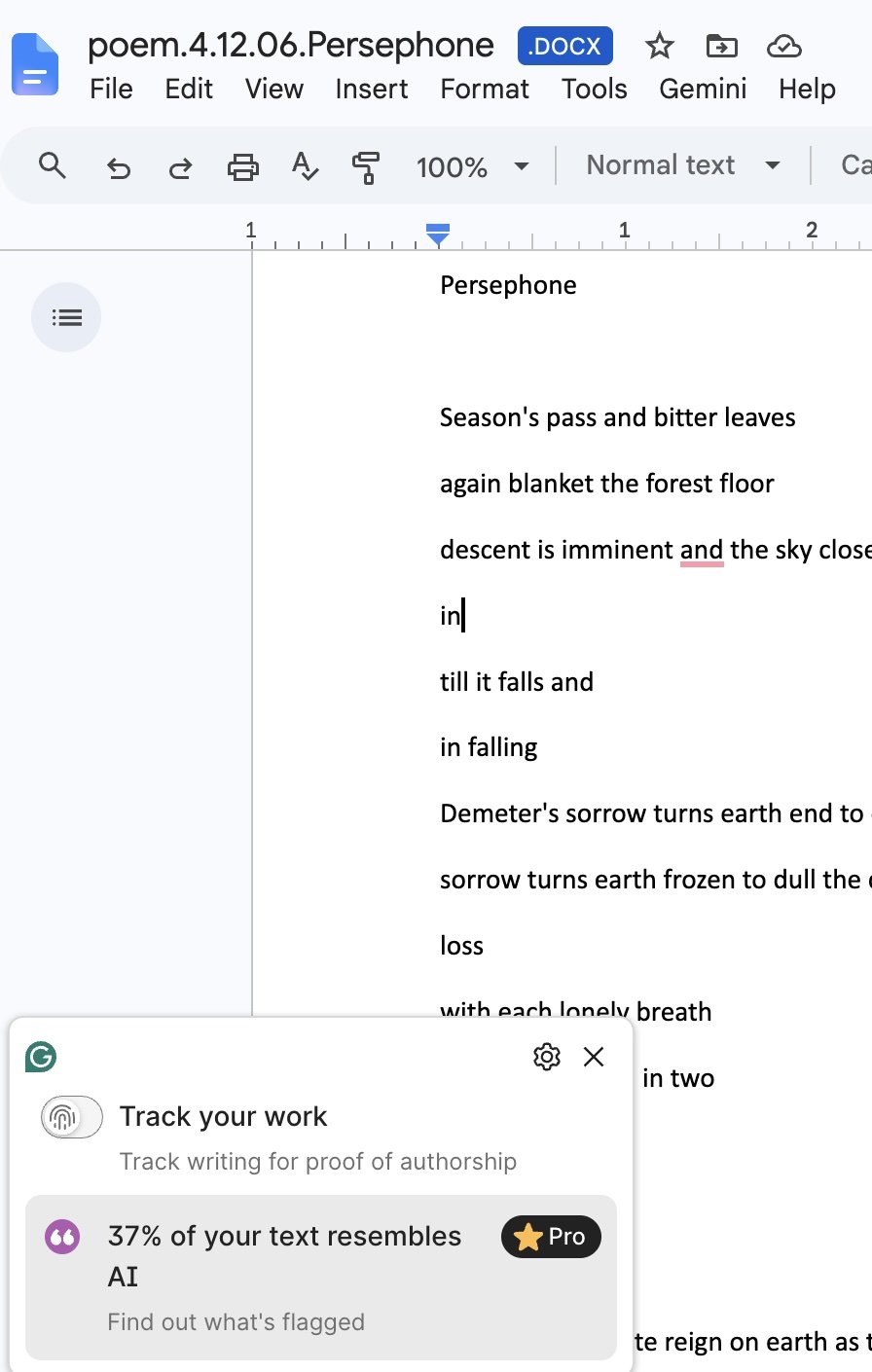
The image below refers to a essay I wrote for publication on Substack. I uploaded the first draft to a Google doc from the transcription. It was edited (by me) to read like a narrative, not a rambling voice note to the Universe.
No AI was used in the essay except for transcription from an audio note: it was flagged as 67% AI.
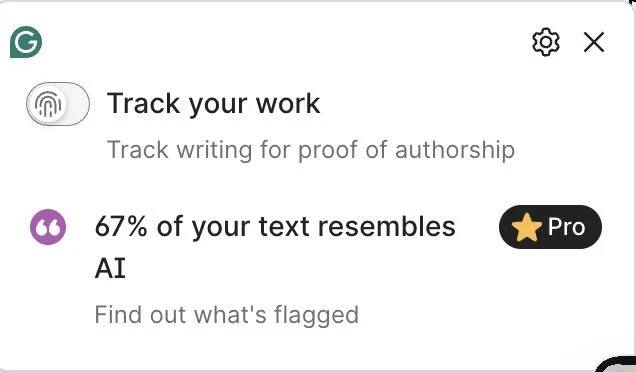

7 Reasons Women Under Earn in Business (+ Tips to Earn More)
The world sees women as world-class multi-taskers; We’re often expected to juggle family, career, health, self-care, and hobbies without ever letting one of those precious balls drop from our hands. Filling many roles can make our lives richer but attempting to be everything to everyone just puts us at risk of being mediocre across the board.

The world sees women as world-class multi-taskers; We’re often expected to juggle family, career, health, self-care, and hobbies without ever letting one of those precious balls drop from our hands. This is not breaking news, of course. Like me, I’m sure you’ve read at least a few of the “Can Women Have It All?” articles that magazines and websites continue to crank out on a near-daily basis.
And—as some of the more helpful articles point out—there are definite advantages to mastering multi-tasking. Filling many roles can make our lives richer, and understanding life balance makes us more agile at work and at home. But some of us aren’t meant to be Jills of All Trades, and attempting to be everything to everyone just puts us at risk of being mediocre across the board.
It also makes us far more likely to fall into the gender wage gap.
Most people are aware that women earn about $0.79 for every $1 paid to men. But these statistics are based largely on corporations, non-profits, universities, and other large-scale businesses. Those of us who have struck out as entrepreneurs or are running small, lean companies aren’t generally included. And my guess is that the gap would widen considerably if we were.
Because when you combine the expectations that society thrusts at us with the expectations we pile onto ourselves, many women business owners become utterly overwhelmed. Which translates into struggling to charge what we’re worth and earn what we deserve.
How do I know? Because I did it myself. For years!
Here’s why, what I did to change those self-defeating habits, and what YOU can do if you’re facing similar challenges:
1 // I Didn't Know How to Earn More
For far too long, I focused on the learning instead of the doing.. I knew there were some steps I could take that could help my business bring in more income (teacher training, coaching) but that’s where my knowledge ended. The actionable steps of building a multi-six figure or million-dollar business were way outside of my knowledge base—and well outside my comfort zone. I knew I could do it, I just didn’t know how to to do it.
WHAT I CHANGED: In my case, I needed a push from an outside source, so I hired mentors and coaches who had built businesses similar to the one I wanted for myself. Every time I got stuck on the “how to” of taking my business to the next level, I invested in targeted support to keep pushing me in the right direction. Each successive mentor highlighted the steps I could take to increase my income, and gave me the confidence to take action.
WHAT YOU CAN DO: I know it’s a major cliche, but keep it as simple as possible to take action. Having a five-year plan is fantastic, but if you don’t even have a five-week plan, start there. If, like me, you know that targeted support would boost your income, start here.
2 // I Believed Helpers Deserved Less
Because I’m a people helper by nature and by trade, I thought I didn’t deserve to command a higher income for my work. I was convinced that what I was doing was a calling, and that the meaning trumped the money. The problem with that? My innate and duty-driven urge to help others often came at the expense of my own health and happiness. To the extent that I couldn’t afford health insurance (so bye-bye regular checkups and health screenings) for my first 6 years in business.
WHAT I CHANGED: For me, this was a simple shift in mindset. It took a long time, but I finally accepted that all hard work deserves compensation, including mine. Helping people—whether it’s your calling or just your job—is incredibly important but you will be unable to do your job well if you are in a state of continuous financial strain.
WHAT YOU CAN DO: Remember that altruistic and creative occupations are equally as valuable as their bottom line-focused counterparts. And remember to take care of YOU first. Or you won’t be in business for long (...and who can you help then?).
3 // I Didn't Want to Be Perceived as Greedy
As a former Southern Baptist, I learned early on that the love of money was the root of all evil (Timothy 6:10). In my child mind I extrapolated that to “money is the root of all evil.” It’s a common mistake and I’m not the first recovering Christian to conflate the meaning of that missive.
WHAT I CHANGED: Honestly? I got bone-tired of struggling to make ends meet month after month, and forced myself to accept that money was an essential part of business. In fact, it’s the essential energy of business, the energy that fuels your actions to attain your desired lifestyle. Money is also the ticket to choice and success, however you might define success for yourself. Yes, greed can get you into trouble, but the desire to earn a comfortable living is neither unreasonable nor perilous.
WHAT YOU CAN DO: When you feel money-guilt rising up, try this mantra: “Money is energy and an indication that I am serving the right people in my business. I deserve prosperity for my hard work.”
4 // I Didn't Want to Charge More Than My Peers
When I began practicing health coaching and yoga therapy, I did what many other service providers do: I compared my fees to those of similar services and charged the same (or less). I figured, “Well, that’s what so-and-so is charging so it must be fair.”
Wrong. Pricing isn’t arbitrary—it’s a strategy. And every person or business offering a particular service may not be offering the same level of service. Most of my “colleagues” weren’t graduate-trained behavioral change coaches with more than 600 hours of dedicated training in person-centered therapeutic yoga and a research background in functional foods and science-based nutrition. They were passionate yoga teachers with considerably less training and far fewer credentials. My professional pathway was a tad more rigorous, so the comparison trap didn’t do my bank account any favors.
WHAT I CHANGED: I did more research on coaches with training commensurate to my own and I found my own financial ease amount—then reverse-engineered my pricing from my service and income goals. I determined who I truly wanted to serve and reminded myself that being exceedingly generous is part of how I want to show up in the world—so charging more for my services aligned with how I wanted to serve! Remember: a higher price point for your offers shows potential customers that you value your own expertise and services. (And, yes, I might’ve held my breath and crossed my fingers on occasion, too! Charging more can feel like a leap of faith even when it’s a conscious choice.)
WHAT YOU CAN DO: Don’t just poke around, do real research. Find colleagues or companies with your level of training, experience, or skill and investigate their price structures. Then charge 15% more because nearly every small business undercharges.
5 // I Didn't Know What to Do With More Money
I’ll be honest: for much of my life I ran from the responsibility associated with wealth. I was so triggered by my own income status that basic financial wellness sent me into mild panic attacks. Yes, I read blogs about personal finance and yes, my daddy taught me early on that I needed to have an emergency fund. And personal savings. And that credit cards were a slippery slope. (True story: I got my first credit card at age 33 when I realized that they could also be handy safety nets.) Short of that, my financial planning strategy was summarized in five words: spend less and save more.
WHAT I CHANGED: I met with a financial planner who told me how to use my profits to my best advantage. Then I actually did what she told me to do. Since her advice was specific to my income, needs, and goals, it was far easier to digest and implement than any book or blog post.
WHAT YOU CAN DO: While this is not financial or legal advice, consider meeting with a financial planner yourself, if you can. Usually, the initial consult is free and if you like a planner’s style and want to continue the relationship, she/he won’t generally charge you direct fees, but will instead take a small percentage from your investment earnings. Financial planners can also help with budgeting, retirement planning, and wills - all deeply boring but incredibly important things.
6 // I Didn't Want to Alienate Anyone
I don’t come from a wealthy family and most of my closest friends are in the blue-collar- to-mostly-comfortable income bracket. Earning more than friends or family felt like a betrayal of basic human connection and a disservice to my community. I didn't want to make anyone I cared about feel "less than," so I didn’t challenge or address my own under-earning habits.
WHAT I CHANGED: I reminded myself that personal wealth and conspicuous consumerism don’t always go hand-in-hand. I could earn more and be wealthier without parading that fact around town and making my loved-ones uneasy, jealous, or aggravated. And, through some delicate but essential conversations, was reminded that the people who love me genuinely want me to succeed. And that includes increasing my earnings —because, really? My ultimate dream is to be a philanthropist and invest in businesses that solve some of the world’s biggest problems...and money is a big part of making that dream a reality.
WHAT YOU CAN DO: Remember that how much you make doesn’t (or shouldn’t) change your fundamental values. Whether you’re making $30,000 or $300,000 each year, you’re still you.
7 // I Didn't Ask for More
I’ll be the first to admit that I learned some hard life lessons, well, the hard way. Including, “You don’t get what you deserve—you get what you ask for.” Since I shied away from asking for higher fees or better pay structures, I walked away with less money and had no one to blame but myself.
WHAT I CHANGED: I read “Lean In.” The book certainly isn’t perfect, but dang, it’s a great reminder that women are paid less simply because we don’t ask for more. I also began preparing myself mentally before every payment negotiation. Walking in knowing that I might be making some uncomfortable demands made it easier to tackle those tough topics when they arose.
WHAT YOU CAN DO: Acknowledge that “If you don’t ask, the answer is always, ‘no.’” And then force yourself to ask. Role play before negotiating, and arrive prepared to be bold. Remember that, as an entrepreneur, you are the only person who determines how much money you deserve for your work.
Does all this mean that I’m earning the absolute maximum I possibly could and constantly negotiating for more? Heck no. I still chicken out or make a bad call once in awhile, and I am totally fine with that. Running a business isn’t about perfection, it’s about progress. I’m smarter, savvier, and braver in my money-related decision-making now, and that’s an accomplishment in and of itself.
I hope that hearing my story has reminded you that everyone struggles, and that small changes can make a huge difference. If you can tweak even one action or habit to increase your earning potential, you are making important, measureable, brag-worthy progress.
Progress that can keep you from falling into that pesky wage gap.