AI Policy + Use
I’m being transparent about my process and my AI usage — where it shows up, where it absolutely does not, and how, exactly, I use the medium. Learn more about how I employ AI at www.KellieAdkins.com/new-blogs
I use AI in my process from thought to page in my public-facing posts and blogs on this website.
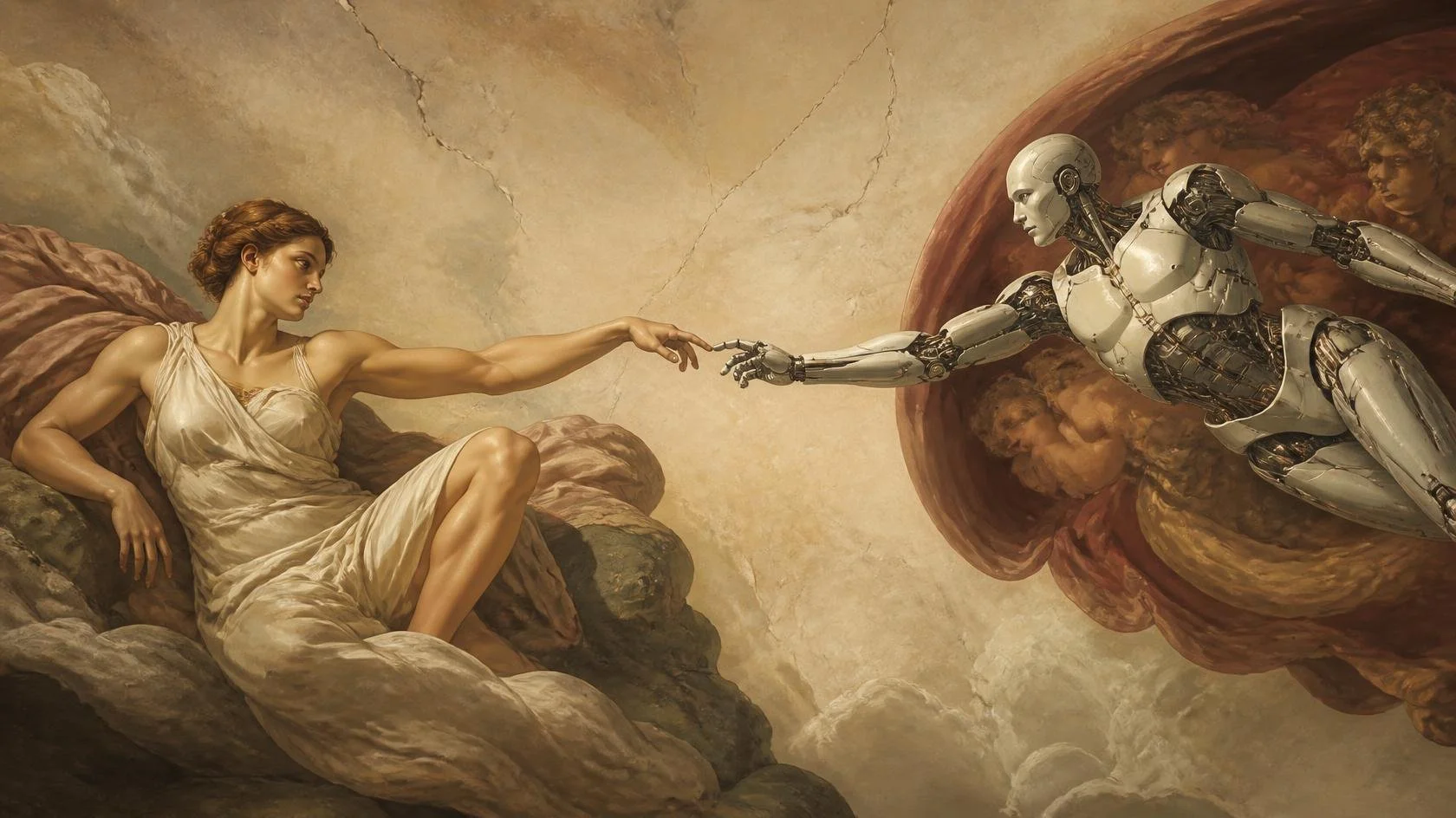
Mostly, that looks like transcribing my audio notes (on the front end) and adding keywords and SEO optimization (at the back end). Very rarely, I use AI to generate images like the one above.
I do not use AI to write or compose my work, to write or compose my social media posts, or to write or compose my articles. Likewise, all comments or messages coming from my social accounts are me —or an actual support team member.
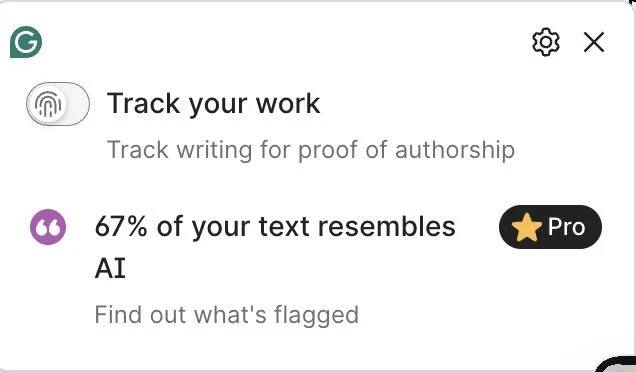
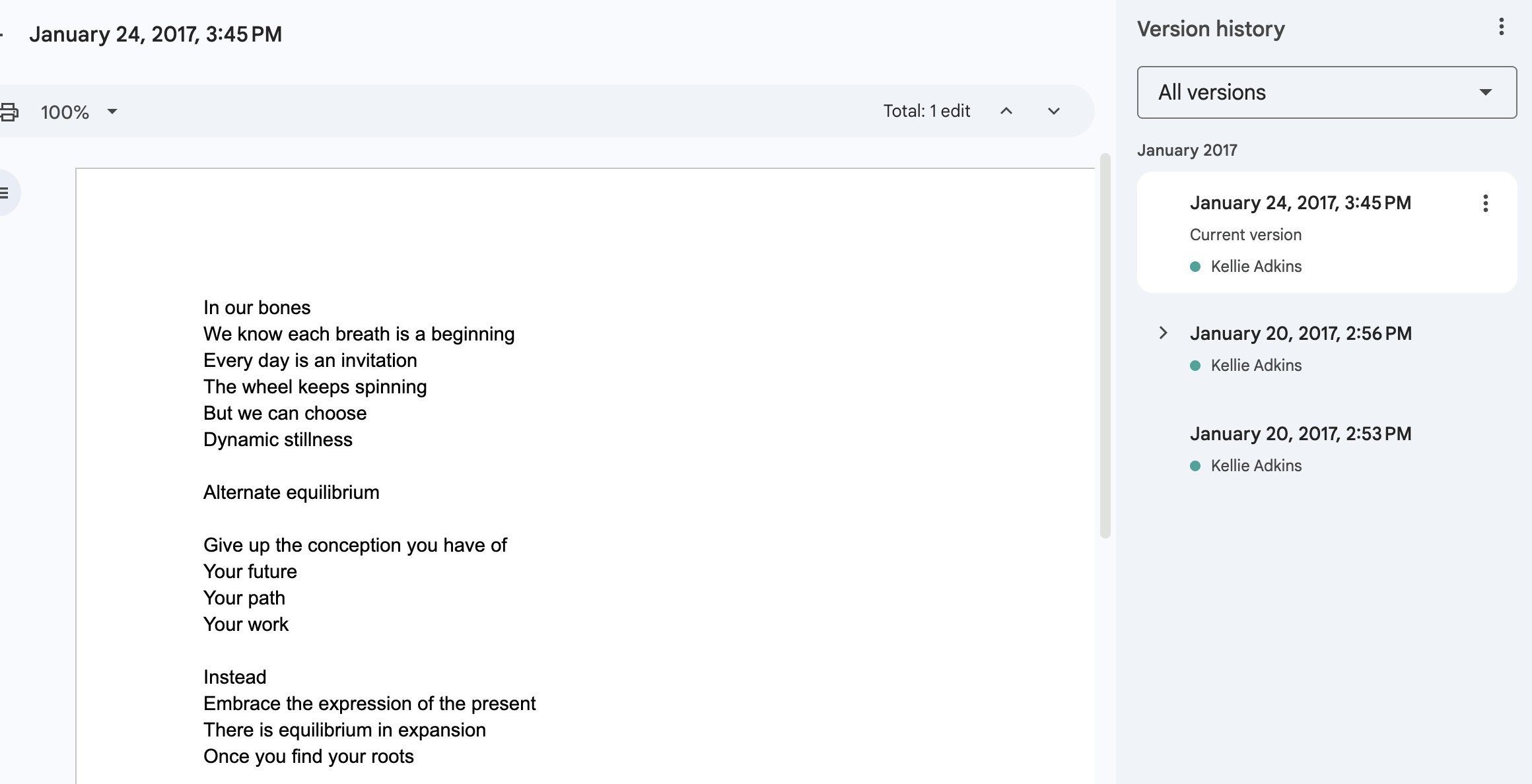
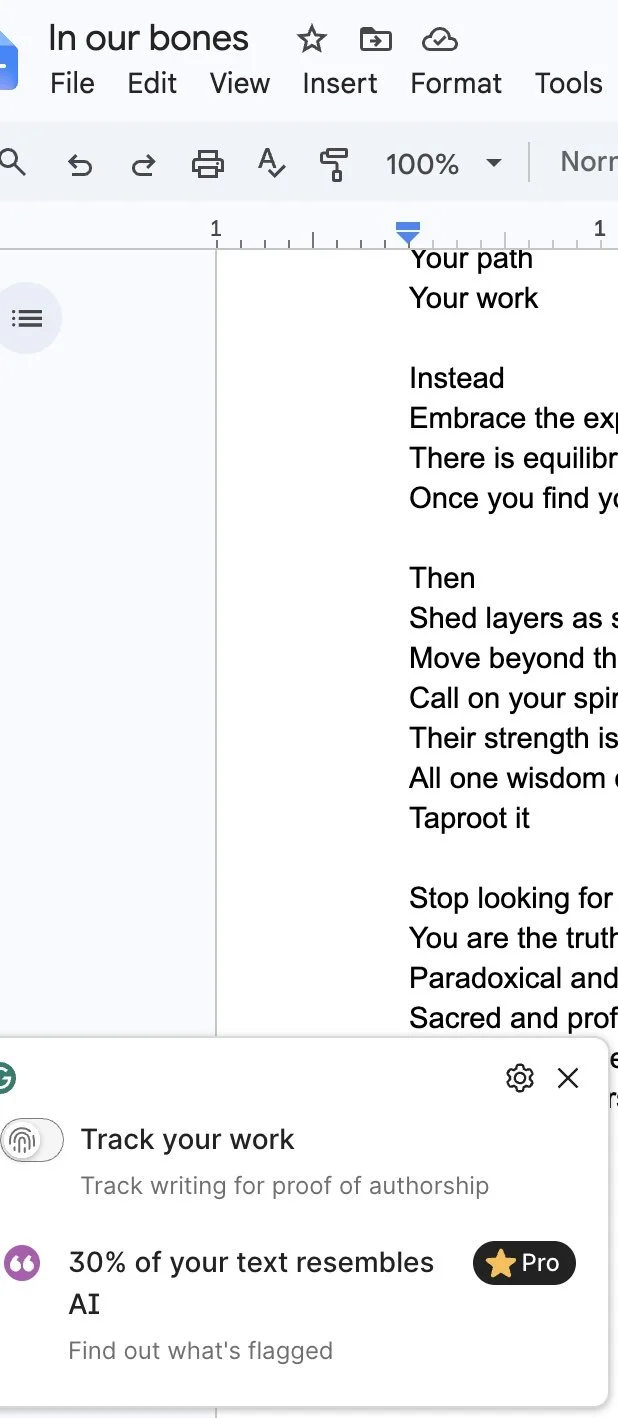
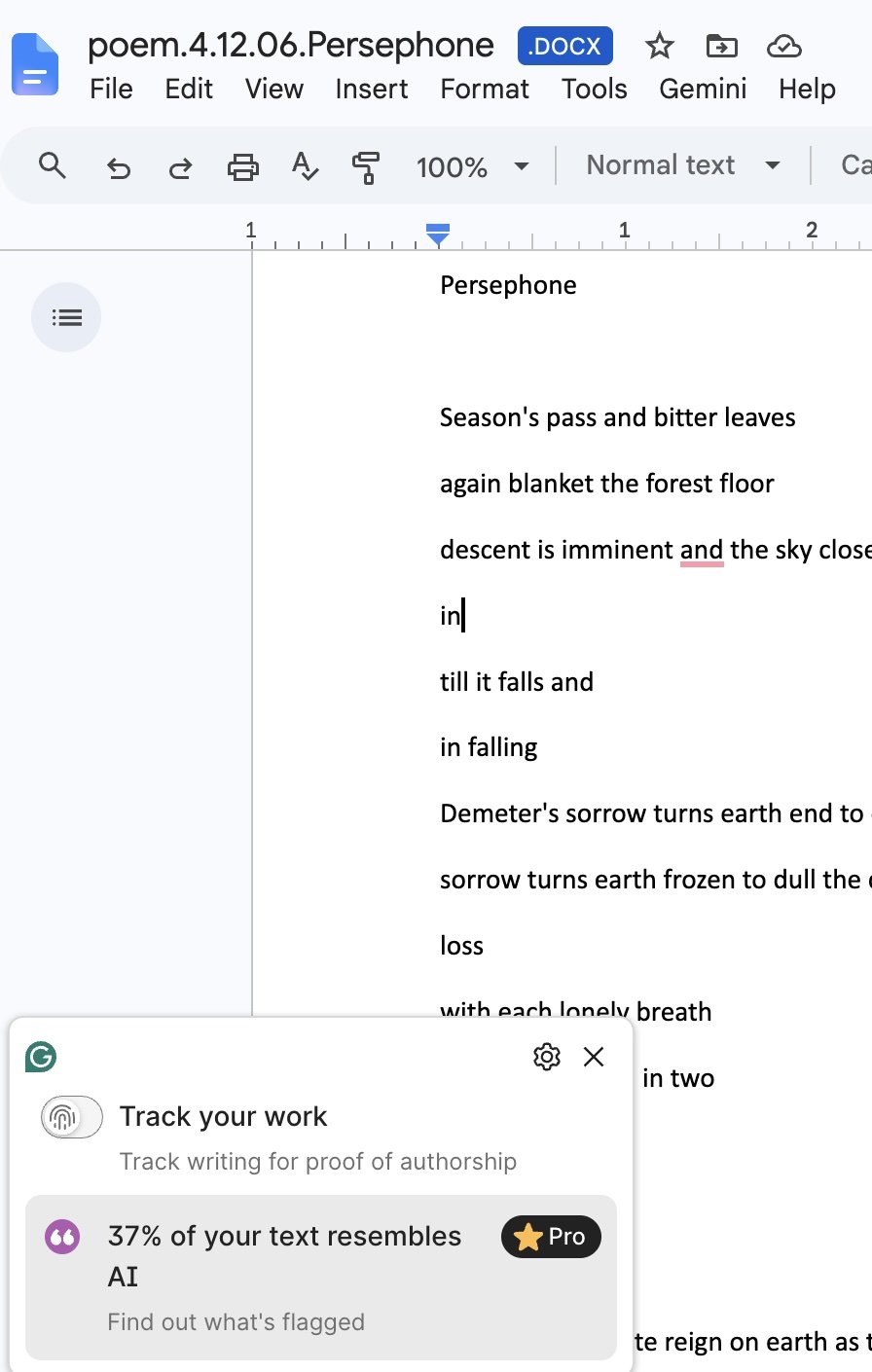
Even so, most of my work is flagged as AI-generated (see below, with timestamps showing when the original work was created).
I have thoughts about why that is:
First, I was trained in academic writing and am a student of philosophy; thus, “if [this], then [that]” construction is hard-wired into my thinking and writing process.
Next, for context, as a youth, my preferred author was Edgar Allan Poe (famously verbose with an astonishingly rich and emotionally evocative vocabulary), and I challenged myself to expand my vocabulary in a similar style. [Stephen King’s On Writing later shape-shifted my particularly verbose writing style—with dubious efficacy, as this list evidences].
Then, I am trained in a particular style of ontological inquiry that involves intensive visualizations, layered mind-maps, and a rigorous system of logical and philosophical tenets, generally organized by itemized, numbered, or mnemonic lists. The systematic organization of knowledge packets into digestible, preservable sound bites—for the purposes of memorization and retrieval—is built into my own intelligence: AND/ALSO superintelligence (computers, AI, LLMs) frameworks are designed to mimic this process. To put a fine point on it: the machine thinks like me because it was designed in the image of critical, logical thinkers. We had the same teachers. We use the same cognitive framework.
Also, I spent years writing on the internet (blogging since 2008); thus, I am part of the community of creatives whose collective works were stolen by the AI companies — they called this theft “training data.”
Next, I am a voracious reader. I know very few individuals who read as much (or as expansively) as do I and that isn’t a value statement; it’s a historical fact. I used to keep count of the books I’ve read. I stopped after reaching 10,000 (in high school). I’ve read 2-3 books every month since then —and no, I’m not telling you how long ago high school was! But I will tell you that I’ve had my nose buried in a book, or several, on the daily, since learning to read in 1985 (you do the math).
Lastly, I spent time working in tech— training the AI (LLM’s) we all now rely on. One cannot export one’s brain to the machine for as long as I did without it impacting both ways.
I use AI to assist with coding —then a human reviews the code.
I do not rely on AI for coding and data security. That is a human’s job.
I use AI to build back-end supports for my own purposes —not to run my business.
I do not use agentic AI to run the back end of my business. I’m picky about privacy, and don’t trust a bot to manage important or delicate details. That is a human’s job.
I do use AI to create mind maps of my business to share with possible collaborators (like this); to create writing assessment rubrics to ensure my writing fits my audience (I write curricula for a variety of audiences); to create tools for my clients to project their revenue in alternate business models (like this); to build scalable solutions to intractable problems in certain industries (like this); to build tools that solve public health problems disproportionately affecting women, children, and marginalized individuals (see below).
I use AI to build apps and virtual reality spaces to support survivors of trauma in their healing—then a human reviews the code.
I do not support, endorse, or enjoin outsourcing therapeutic work or relying on agentic AI to deliver therapeutic sessions. I do support the use of AI, or AI-created tools, to deliver in-the-moment resources or supportive tools between sessions.
I'm transparent about where I use the medium— and, just as importantly, where it never touches my work.
AI doesn’t touch my research meant for publication or my client’s sensitive information. Full stop.
AI doesn’t touch my emails, client conversations, or editing process (all typos, odd phrases, and dangling participles are my own). I’ve opted out of Gemini in my Google workspace and do not use Notion or AI transcription without explicit consent: if a client requests a transcription or recording of our calls, I first disclose that use of AI, then get their opt-in in advance.
When I do use AI, I use paid, enterprise-level tools with the strongest data privacy agreements currently available (they explicitly do not train on my data). Even then, I treat the medium like what it is: a very smart but inexperienced college freshman that makes a lot of mistakes and comes with deep biases and possible nefarious purposes.
Every idea, argument, and turn of phrase is mine. I built an accessible process, employing AI for transcription, product development, and online visibility because 1) I'm a verbal, nonlinear thinker, and 2) I used to pay for the work I now use enterprise-grade AI to do faster, and 3) because I think an honest answer to "did you use AI" deserves more than a “yes” or “no.”
Pictured below: a few receipts.
The image below refers to a essay I wrote for publication on Substack. I uploaded the first draft to a Google doc from the transcription. It was edited (by me) to read like a narrative, not a rambling voice note to the Universe.
No AI was used in the essay except for transcription from an audio note: it was flagged as 67% AI.